
Long-running species monitoring programmes are rare but critical assets in conservation. They capture change over time, support evidence-based decision making, and help organisations understand whether species recovery efforts are working.
What is a data audit?
Data audits are essential tools to ensure that existing monitoring can support species recovery efforts. By reviewing whether existing data are ‘fit-for-purpose’, organisations can protect the value of long-term monitoring and more effectively allocate resources.
The natterjack toad monitoring programme
The Natterjack Toad Monitoring Programme is one of the longest-running monitoring programmes in Great Britain: some 40 years and counting! The success of the programme represents decades of effort by NGOs and landowners to track one of the UK’s most sensitive amphibians.
The brief
Like many long‑running schemes, the methods and objectives of the programme have shifted over time. This presents challenges in terms of ensuring that data generated through the scheme continue to meet current (and future) conservation priorities.
The Amphibian and Reptile Conservation Trust (ARC), who manage the programme, commissioned a review of the natterjack toad monitoring dataset. The aim was to better understand how existing data might best support current monitoring and conservation efforts.

Our approach
During her PhD, Becky Turner (Empirical Nature) carried out a deep dive into the national dataset. The review focused on understanding whether data were ‘fit-for-purpose’ in the specific context of national monitoring: what questions could the historical data answer well and where could additional clarity or consistency improve future analyses. The review therefore had two linked aims:
(1) National trends – Understand the suitability of existing data to infer estimates of natterjack toad abundance trends at the national scale.
(2) Uncertainty – Assess how data structure, coverage and survey effort influenced trends estimates.
Key outcomes
The data audit confirmed several encouraging signs for natterjack toad populations in Great Britain, and for the potential of the monitoring programme to support conservation policy and evidence frameworks in the UK. At a national level, natterjack toad abundance appeared broadly stable over the previous decade, while site‑level analyses highlighted meaningful contrasts between populations, habitats and management regimes.
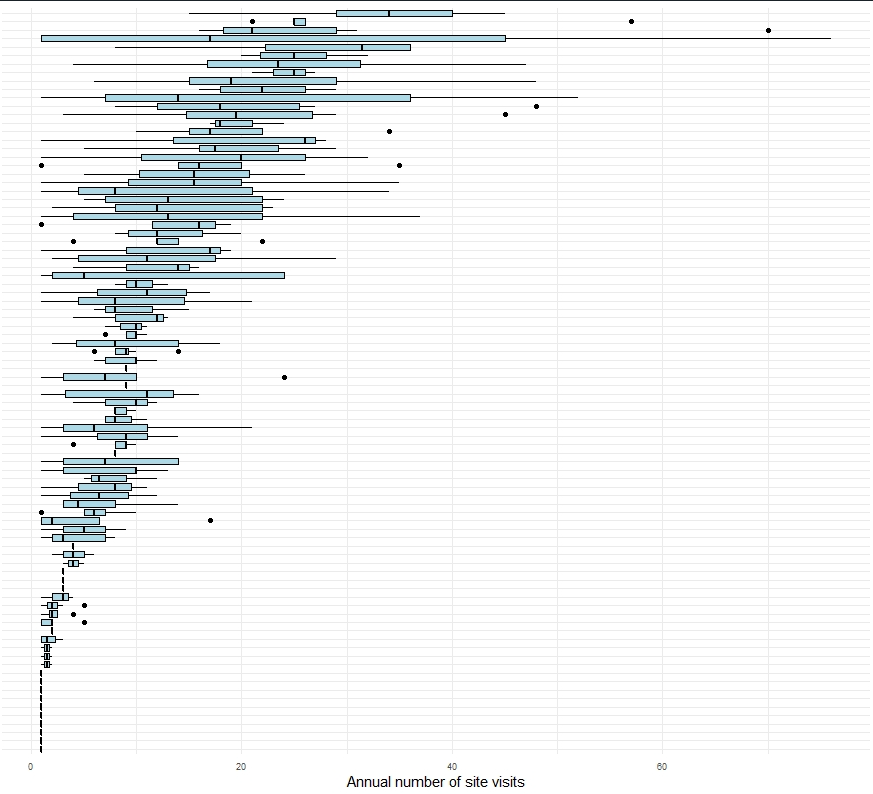
We also gained important insights into current data collection and management practices. Differences in recording conventions and metadata affected how site-level data could be used to infer trends. By making these patterns explicit, our audit provided ARC with a clear evidence base for improving on current practices. ARC have since started filling key data gaps, streamlining site information, and investing in upgraded database systems.
Conclusion
Our role was not to judge past practice, but to respect the scale of work already invested and to help that effort deliver even greater value into the future. The actionable outcomes from the project illustrates the value of supportive, evidence‑led data audits for coordinators of species monitoring programmes.
Deep dives like this are often most useful because they create shared understanding between data collectors and analysts about how evidence can be used and improved over time.
Thank you, ARC Trust, for the opportunity to support this long-running monitoring programme!
Want to understand what your biodiversity data can really tell you?
At Empirical Nature, we help organisations make sense of long-term monitoring data through our Biodiversity Monitoring Analytics services. Our data audits provide a supportive, evidence-led review of your existing datasets. We help your team to identify strengths, limitations and realistic opportunities to improve how data are collected, managed and used.